
Overview
Not every acne breakout behaves the same way. Cystic acne and hormonal acne can look similar from the outside, but their causes, treatment approach, and recovery timeline are very different.
For patients looking for the Best Cystic Acne Treatment in South Delhi or the Best Hormonal Acne Treatment in South Delhi, the first step is not choosing a cream or procedure. It is identifying the exact type of acne and the reason it keeps coming back.
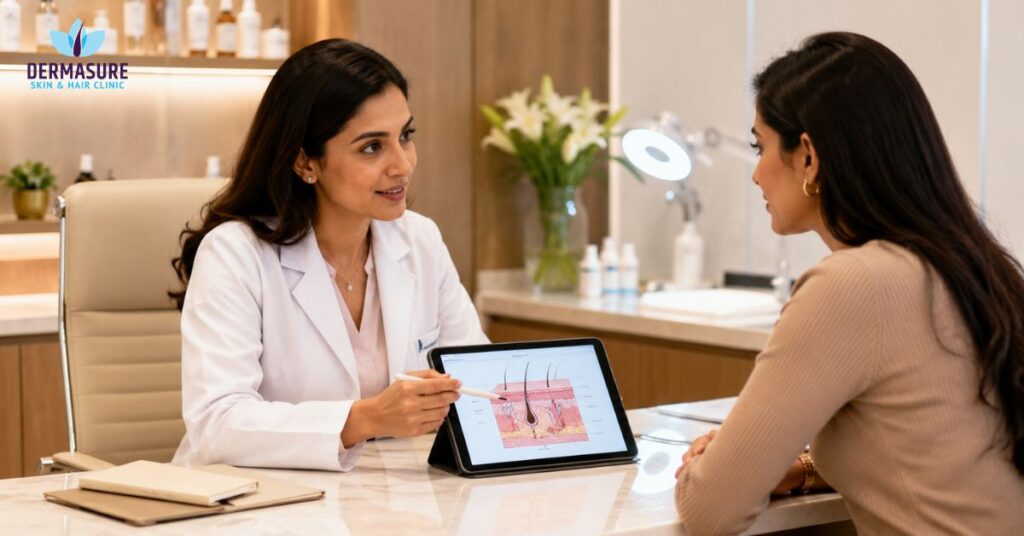
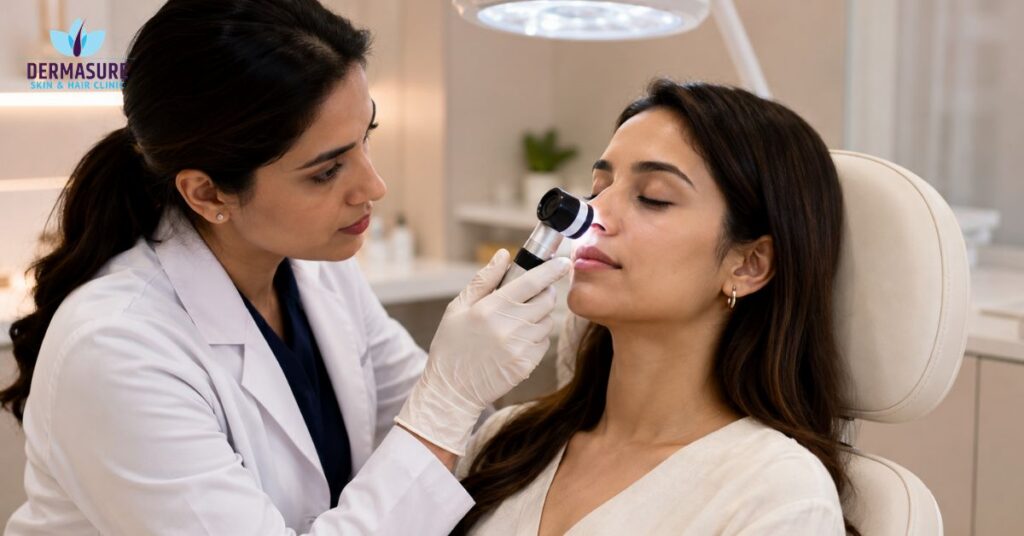
At Dermasure Clinic in South Delhi, every acne consultation starts with a dermatologist-led assessment so the treatment plan is based on your skin type, acne pattern, lifestyle, and medical history.
What Is Cystic Acne
Cystic acne develops deep under the skin. It is usually painful, inflamed, and slow to heal. Unlike small surface pimples, cystic acne forms when a blocked pore becomes deeply infected and causes inflammation around the surrounding tissue.
This type of acne needs proper medical attention because it often leaves dark marks, pits, and scars when not treated early.
Common signs of cystic acne include:
- Large, painful bumps under the skin
- Breakouts that stay for weeks instead of days
- Tenderness, redness, or warmth around the affected area
- Recurring acne on the jawline, lower face, chest, back, or shoulders
- Dark spots or acne scars after the breakout heals
If your acne is deep, painful, and leaving marks, a detailed consultation with a Best Acne Dermatologist in South Delhi can help prevent long-term scarring.
What Is Hormonal Acne
Hormonal acne is linked to internal hormonal changes, especially androgen activity that increases oil production. This excess oil can clog pores and trigger repeated breakouts, even when your skincare routine seems correct.
Hormonal acne is common in women in their 20s and 30s, but it can affect men as well. It often follows a pattern rather than appearing randomly.
Common signs of hormonal acne include:
- Breakouts around the chin, jawline, and lower face
- Flare-ups before periods or during hormonal changes
- Oily skin during breakout phases
- Acne that worsens with stress, poor sleep, or lifestyle triggers
- Repeated breakouts despite using standard acne products
If your acne appears at the same time every month or keeps returning in the same areas, hormonal factors may be involved.
Best Treatments for Cystic Acne in South Delhi
The best cystic acne treatment in South Delhi depends on the severity of inflammation, risk of scarring, previous treatment history, and skin sensitivity. Since cystic acne sits deeper in the skin, regular face washes and spot creams are usually not enough.
At Dermasure Clinic, cystic acne treatment may include:
- Cortisone injections to reduce large, painful cysts quickly and lower the risk of scarring
- Prescription oral medications such as antibiotics or isotretinoin for persistent, severe, or recurring cystic acne
- Targeted topical medications to control clogged pores, bacterial activity, and inflammation
- Chemical peels using dermatologist-selected acids to reduce congestion and post-acne marks
- Acne scar treatment with microneedling or laser resurfacing once active acne is controlled
For patients with active acne and marks, Dermasure may combine medical therapy with chemical peels or acne scars treatment after assessing skin condition and treatment suitability.
Best Treatments for Hormonal Acne in South Delhi
Hormonal acne usually needs more than topical treatment because the root trigger is internal. The right plan often combines medical management, skincare correction, and lifestyle guidance.
The best hormonal acne treatment in South Delhi may include:
- Hormonal therapy, when suitable, to reduce androgen-driven oil production
- Prescription topicals such as retinoids, niacinamide, or anti-inflammatory combinations
- Oral medications under dermatologist supervision for recurring or resistant acne
- Medi-facials to help control oiliness and keep pores clearer during flare-up phases
- Lifestyle guidance around stress, sleep, diet, and menstrual pattern tracking
Because hormonal acne can be linked to cycle changes, PCOS, stress, or internal imbalance, treatment should be guided by an experienced Acne specialist in South Delhi rather than self-medication.
When to See an Acne Specialist in South Delhi
You do not need to wait until acne becomes severe before booking a consultation. Early treatment can prevent marks, scarring, and repeated flare-ups.
You should consider seeing a dermatologist if:
- Breakouts have continued for more than three months
- You are developing painful cysts or nodules
- Your acne follows a monthly hormonal cycle
- Pharmacy products are not improving your skin
- Acne marks or scars are becoming visible
- Your skin confidence is being affected every day
You can explore Dermasure Clinic’s full range of acne treatments or book a consultation with Dr. Shirin Bakshi for a personalized acne treatment plan.
Conclusion
Cystic acne and hormonal acne are both treatable, but they require different strategies. Cystic acne needs deep inflammation control and scar prevention, while hormonal acne needs internal trigger management along with topical support.
The mistake most people make is treating every breakout the same way. Once the type of acne is correctly diagnosed, the treatment becomes more focused, effective, and sustainable.
If you are looking for the Best Acne Treatment in Delhi, Dermasure Clinic in South Delhi offers dermatologist-led acne care, advanced treatment options, and realistic guidance for long-term skin improvement. Book a Consultation at Dermasure, South Delhi.
Frequently Asked Questions
Q. How do I know if my acne is cystic or hormonal?
Cystic acne is usually deep, painful, and slow to heal. Hormonal acne often appears around the chin and jawline and follows a monthly pattern. A dermatologist can confirm the acne type after examining your skin and history.
Q. Can hormonal acne clear up without treatment?
Hormonal acne may reduce at times, but it often returns if the internal trigger is not managed. Dermatologist-led treatment gives better long-term control.
Q. How long does cystic acne treatment take to show results?
Many patients notice improvement within 6 to 8 weeks, but a complete plan may take 3 to 4 months depending on severity, skin response, and scarring risk.
Q. Is isotretinoin safe for treating cystic acne?
Yes, isotretinoin can be safe and effective when prescribed and monitored by a qualified dermatologist. It is usually recommended for severe or resistant cystic acne after proper evaluation.