

Overview
A lot of anti-aging advice is written as if everyone’s skin is at the same stage of decline, needing the same aggressive intervention regardless of age. That is not how skin actually ages, and it is not how treatment should be approached either.
What genuinely helps skin in your early 30s is often quite different from what becomes necessary in your 40s, and using the wrong approach at the wrong stage either wastes effort on something too gentle to matter or jumps straight to intensive treatment before the skin actually needs it.
At Dermasure Clinic in South Delhi, Dr Shirin Bakshi, widely regarded as one of the best anti-aging dermatologists in Delhi, tailors anti-aging plans specifically to where a patient’s skin actually is, not just their age on paper. This is a useful general framework for understanding what changes as skin moves through different decades.
What Is Actually Happening to Skin in Your 30s?
This is the decade where collagen production begins its gradual decline, typically starting around age 30 to 35. The change is subtle at first. Skin might start losing a little of its bounce. Fine lines may begin appearing around the eyes, particularly from expression. Cell turnover slows slightly, meaning skin can start looking a touch less radiant than it did in your 20s.
This is not a dramatic shift. It is the very beginning of a process that will continue gradually over decades. And this is exactly why the 30s are the most valuable window for preventive skincare and preventative treatment rather than corrective treatment.
What Treatments Actually Make Sense in Your 30s?
The goal in this decade is to support the skin’s existing collagen production and protect against damage that accelerates aging, rather than aggressively correcting visible signs that have not significantly developed yet.
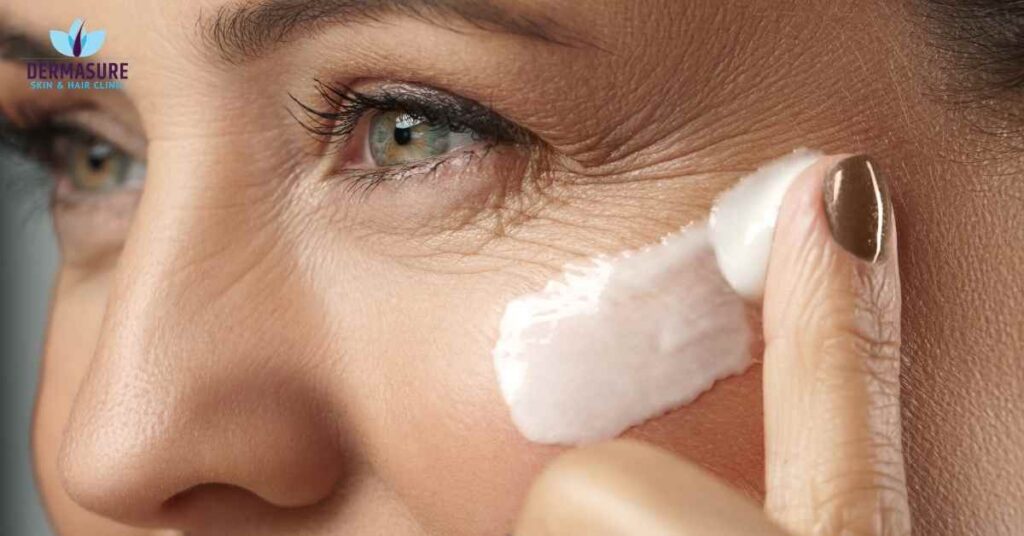
Medical facials and HydraFacial deliver active ingredients like vitamin C, hyaluronic acid, and peptides directly into the skin, supporting hydration and early collagen support without any downtime. This is a strong, low-intervention starting point for someone new to clinical skincare.
Light chemical peels using glycolic or lactic acid encourage healthy cell turnover and address early dullness or minor unevenness before it becomes more established pigmentation. You can read more about chemical peels and how they fit into a preventive skincare routine.
Preventative Botox in small, targeted doses is increasingly common in the 30s, used to soften the very earliest expression lines before they become etched into the skin at rest. This is a more conservative use of the treatment than later corrective use.
Consistent sun protection and antioxidant support matter more in this decade than any clinical treatment. The damage prevented now is what determines how much correction is needed later.
What Changes by the Time You Reach Your 40s?
By the 40s, the decline in collagen and elastin becomes more pronounced and visible. Skin laxity becomes more noticeable. Volume loss in the cheeks and under the eyes becomes apparent. Pigmentation that was managed earlier can become more stubborn. Fine lines that were only visible with expression in the 30s often become visible at rest.
This is the decade where treatment shifts from prevention to active correction and where more intensive skin rejuvenation options genuinely become relevant rather than premature.
What Treatments Become More Relevant in Your 40s?
Laser skin brightening and resurfacing, including fractional laser resurfacing and Q-Switch Nd: YAG lasers, address pigmentation and texture changes more directly than the gentler peels that sufficed earlier.
Radiofrequency and skin tightening treatments become more relevant as visible laxity develops, addressing the structural firmness that preventative treatment in the 30s was working to delay rather than reverse.
Dermal fillers address the volume loss that becomes noticeable in the cheeks, under the eyes, and around the mouth, restoring structure that has genuinely been lost rather than simply softening expression lines.
Glutathione and more targeted brightening protocols are often introduced at this stage for patients dealing with more established pigmentation and dullness that has built up over the years.
You can explore the full range of facial rejuvenation treatments at Dermasure to understand how these are typically combined for patients in this stage.

Why Does Getting the Stage Right Actually Matter?
Starting aggressive corrective treatment too early in the 30s, when prevention would have sufficed, means spending money and undergoing procedures the skin did not yet need. Waiting too long into the 40s without any preventative care in the 30s means dealing with more advanced changes that take longer and cost more to address.
At Dermasure, every consultation looks at the actual condition of the skin rather than defaulting to an age-based protocol. Some people in their early 40s have skin that still responds well to lighter preventative approaches. Some people in their early 30s, particularly with significant sun exposure or genetic predisposition, need more active intervention earlier than the general framework suggests.
Conclusion
Anti-aging treatment is not one plan applied at increasing intensity as you get older. It is a different conversation at each stage, built around what the skin actually needs at that point rather than what feels urgent because of age alone. Getting that calibration right, with an honest assessment of where your skin genuinely is, makes the difference between treatment that works with your skin’s timeline and treatment that is either too little too late or more than was ever necessary.
Frequently Asked Questions
Q. Should I start anti-aging treatment in my 20s?
For most people, the 20s are primarily about prevention through sun protection and a basic skincare routine rather than clinical treatment. Some clinical interventions, like light peels, can begin in the late 20s for specific concerns, but aggressive anti-aging treatment is generally not necessary this early.
Q. Is preventative Botox in your 30s actually worth it?
For some patients with early, expression-driven lines, it can be a reasonable preventative measure. It is not necessary for everyone in their 30s, and a consultation should assess whether your specific skin would benefit before recommending it.
Q. What is the biggest mistake people make with anti-aging treatment in Delhi?
Either starting aggressive corrective treatments too early without a genuine need, or waiting until significant aging has set in without any preventative care along the way. Both approaches are less effective than a plan that matches treatment to where your skin actually is.
Q. How often should anti-aging treatment plans be reassessed?
Annually is a reasonable interval for most people, since skin changes gradually but consistently. A reassessment ensures the treatment plan continues to match what your skin actually needs as you move through different stages.