

Overview
There is a strange patience people extend to acne scars that they do not extend to almost anything else on their skin. A fresh breakout sends most people straight to a pharmacy. A scar from three years ago just sits there, somehow accepted as permanent, the way a small chip in a wall eventually stops being noticed.
Part of this comes from an outdated belief that scars cannot really be treated, only covered up or lived with. That belief has not caught up with what is currently possible, as covered in more detail in the acne scar removal options available in South Delhi. Most patients carrying this belief have simply never sat down with a dermatologist to actually look at their specific scarring, since the assumption tends to form early and then never gets tested against an actual professional opinion.
Why Do People Wait So Long Before Treating Acne Scars?
Most people avoid treatment not out of indifference but because of a few assumptions that do not hold up well under examination. That treatment will be painful. That it will not really work. It is only worth it for severe scarring, not the handful of marks on one cheek.
There is also a quieter assumption that treating scars is somehow vain or unnecessary compared to treating active acne, which is not really how dermatologists think about it. Scarring affects confidence and quality of life in ways that are just as valid as treating an active breakout, and many patients describe the emotional toll of scarring as lasting far longer than the acne that caused it.
Once a person actually sits down with a dermatologist and looks at their specific scarring, these assumptions tend to fall apart fairly quickly. Mild to moderate scarring, which describes most cases, often responds well to options that involve very little downtime, which surprises many patients who expected a long, difficult recovery process.
Does Every Type of Acne Scar Need the Same Treatment?
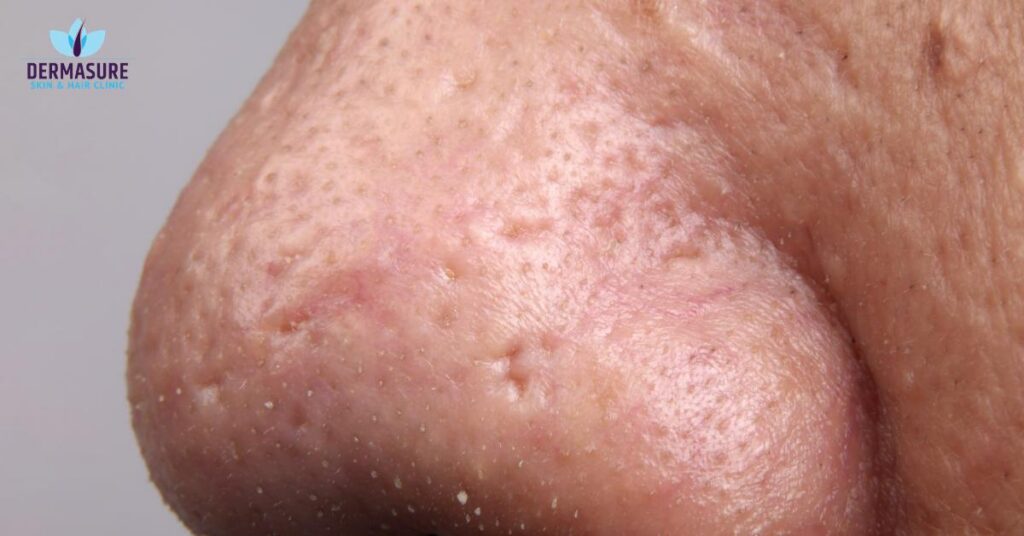
This is the part that gets missed most often. A shallow, rolling scar behaves nothing like a deep, narrow ice-pick scar, and a raised scar is a different category entirely. Treating all scar types the same way is part of why some people try one round of treatment, see limited results, and conclude that nothing will work for them, when in reality the treatment simply was not matched to the scar type present.
Getting this distinction right from the start is the focus of choosing the right acne scar treatment, which begins with identifying which type, or combination of types, is actually present before deciding between options like microneedling, laser resurfacing, dermal fillers, or chemical peels.
Most patients have more than one scar type present at once, which is part of why a single, generic approach so often underdelivers compared to a plan built around the actual mix. A boxcar scar near the cheekbone might respond best to one technique, while a rolling scar nearby might need an entirely different one, and addressing both correctly often means combining approaches rather than picking just one.
What Does Scar Treatment Actually Feel Like?
This is usually the part people are most nervous about, so it deserves a direct answer rather than reassuring language. Most non-surgical scar treatments involve mild discomfort, comparable to a rubber band snap or a brief warm, prickling sensation, with downtime typically limited to a few days of redness rather than weeks of recovery.
Laser-based scar treatment in particular has a reputation for being more intense than it actually is in practice, largely because the word laser itself sounds more dramatic than the actual sensation involved. Numbing cream is also commonly used before most procedures, which further reduces discomfort during the session itself.
How Many Sessions Does It Actually Take?
There is no single number here, and any clinic promising one session for deep scarring is worth being cautious of. Most treatment plans involve a series of sessions spaced several weeks apart, since skin needs time to generate new collagen between treatments, and rushing the process can actually reduce the quality of the final result.
A clearer sense of timelines and what to expect session by session is covered in more depth when looking at which acne scar treatment fits a particular skin type.
What Happens If Acne Is Still Active Alongside the Scarring?
This is a common situation and a fair concern. Treating active breakouts and existing scars at the same time requires a plan that does not aggravate the skin further. At Dermasure, Dr. Shirin Bakshi typically addresses active acne first, or alongside scar treatment in milder cases, rather than starting cosmetic procedures on inflamed skin, an approach echoed by the clinic’s acne scar specialists.
This sequencing matters because aggressive scar treatment on actively inflamed skin can sometimes worsen pigmentation or trigger new breakouts, which defeats the purpose of the procedure entirely. Patients dealing with both concerns simultaneously are usually given a phased plan rather than trying to address everything in a single sitting.
Does Skin Tone Affect How Scar Treatment Is Approached?
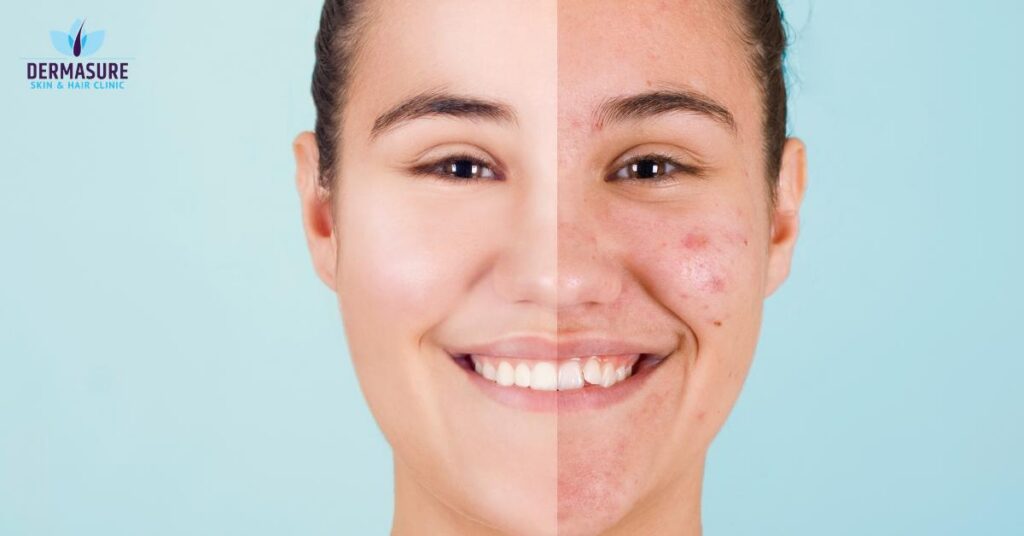
Skin tone is another factor that affects how scar treatment is approached, particularly for Indian skin types, which carry a higher risk of post-procedure pigmentation if the wrong laser settings or technique are used. This is one of the reasons working with a dermatologist who treats scarring regularly, rather than occasionally, tends to produce more predictable results, the same caution that applies to laser treatment more broadly for Indian skin.
Patients with darker skin tones are also advised to discuss this explicitly during their first consultation, since it should directly shape the devices and settings used throughout their treatment plan. For more on how skin tone is considered at Dermasure, see acne scar removal options available in South Delhi.
Conclusion
Acne scars are not a permanent fixture, regardless of how long they have been there. With the right diagnosis of scar type and a realistic, paced treatment plan, visible improvement is achievable for most people, often with less discomfort and downtime than expected.
Frequently Asked Questions
Can old acne scars, even ones from years ago, still be treated?
Yes. Scar age does not significantly limit treatability. What matters more is the scar type and depth, which a dermatologist can assess directly.
Is laser treatment the best option for all acne scars?
Not necessarily. Laser resurfacing works well for some scar types, while others respond better to microneedling, fillers, or chemical peels. The right option depends on the specific scarring.
How much downtime should I expect after a session?
Most patients see mild redness for two to four days, though this varies by treatment type and individual skin response.
Will the scars come back after treatment?
Existing scars do not return once treated, but new scarring can form if active acne is not also managed.
Is scar treatment suitable for darker skin tones?
Yes, with the right settings and approach. This is an important detail to discuss directly with a dermatologist familiar with treating Indian skin types.
CTA